

Hardwood Floor Installation in Vancouver, WA: Solid vs. Engineered and What Local Homes Actually Need
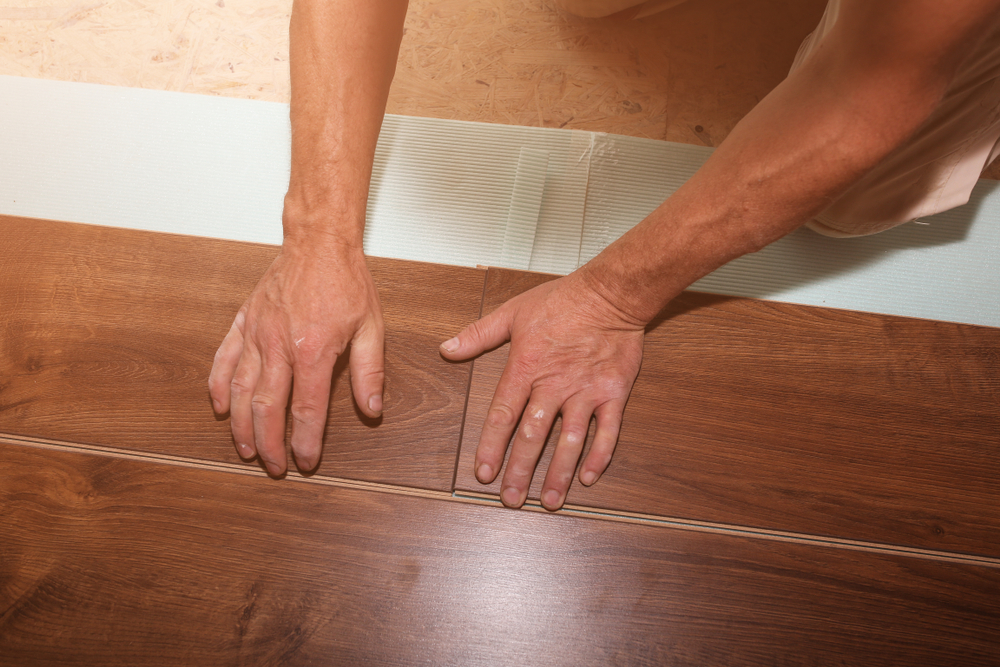
Choosing between solid and engineered hardwood is not just a matter of appearance. In Vancouver, WA, the right choice also depends on your subfloor, crawlspace conditions, indoor humidity, the age of the home, and where the flooring will be installed.
Homes around Hough and Arnada can present very different flooring conditions than newer properties in east Vancouver or surrounding Clark County. Before choosing a product, it helps to understand what each type of hardwood actually needs to perform well.
Quick answer: Solid hardwood can be an excellent option over suitable wood subfloors when moisture conditions are controlled. Engineered hardwood is generally more dimensionally stable, which can make it a practical choice for installations over concrete, in homes with greater seasonal moisture variation, or in spaces where solid wood may be less suitable. The best choice depends more on the conditions inside and underneath the home than on appearance alone.
What local homeowners should know
-
Engineered hardwood is constructed in layers, helping it resist dimensional movement better than a comparable piece of solid wood.
-
Solid hardwood offers substantial refinishing potential, making it appealing for Vancouver, WA homes where owners want a floor that may remain in place for decades.
-
Crawlspace moisture deserves attention in Clark County because moisture beneath a wood-framed floor can affect the subfloor and flooring above it.
-
Concrete slabs require a different installation evaluation than traditional plywood or wood subfloors.
-
Product quality, subfloor preparation, moisture testing, acclimation, and installation method can matter just as much as the solid-versus-engineered decision.
Why Does the Solid vs. Engineered Choice Matter in Vancouver, WA?
The solid versus engineered choice matters in Vancouver, WA because hardwood naturally responds to changes in moisture, and local homes include everything from older wood-framed houses with crawlspaces to newer construction and slab-based spaces. The flooring needs to match both the structure and the conditions surrounding it.
Clark County Public Health specifically advises homeowners to prevent water from entering crawlspaces and basements and to correct drainage and plumbing problems that introduce moisture. Clark County building guidance also addresses crawlspace ventilation, ground covers, and drainage around foundations. Those concerns are relevant to hardwood because a consistently damp area below the floor can influence the wood materials above it.
Housing conditions also vary considerably within the city. The City of Vancouver describes Arnada and Hough as neighborhoods with substantial older housing stock, while areas such as Evergreen Highlands contain many ranch-style homes from the 1950s through the 1970s. Those differences can mean different subfloors, remodeling histories, floor elevations, and installation challenges.
Au Natural Hardwood Floors approaches the decision by looking at the actual home rather than assuming one type of hardwood is automatically best. From this point forward, we focus on the installation conditions, the homeowner’s goals, and how the floor needs to perform.
What Is the Main Difference Between Solid and Engineered Hardwood?
The main difference between solid and engineered hardwood is construction: solid flooring is milled from one piece of wood, while engineered flooring uses a real hardwood wear layer over a layered wood core. That construction affects dimensional stability, installation options, thickness, and future refinishing potential.
Solid hardwood has the traditional construction many homeowners picture when they think about wood floors. Depending on the product and thickness, it can often be sanded and refinished multiple times over its service life.
Engineered hardwood is still real wood flooring. It should not be confused with laminate or wood-look vinyl. Its layered construction is designed to reduce some of the expansion and contraction associated with changes in moisture.
That additional stability can be useful in Pacific Northwest homes, but it does not make engineered hardwood waterproof or eliminate the need for moisture control.
Which Hardwood Is Better for Vancouver, WA Homes?
Neither flooring type is universally better for Vancouver, WA homes, but engineered hardwood often has an advantage where moisture variation, concrete, or installation constraints make dimensional stability especially valuable. Solid hardwood remains an excellent option when the subfloor, moisture levels, and installation environment are appropriate.
For a traditional wood-framed home in Hough, Arnada, or Hudson’s Bay with a suitable wood subfloor and well-managed crawlspace, solid hardwood may be a strong candidate.
For a newer property, remodeled lower level, concrete installation, or space where the flooring system calls for greater dimensional stability, engineered hardwood may make more sense.
The decision should follow an evaluation of the home, not the other way around.
How Does Crawlspace Moisture Affect Hardwood Flooring?
Crawlspace moisture can affect hardwood flooring by increasing the moisture content of the subfloor and creating uneven conditions between the top and bottom of the flooring system. Over time, excessive moisture differences can contribute to movement, cupping, gaps, or other performance problems.
This is particularly important in wood-framed Clark County homes.
Before hardwood installation, the visible living space is only part of the picture. Conditions beneath the floor may need attention too. A crawlspace with standing water, plumbing leaks, drainage problems, or other moisture concerns should not simply be covered by a new hardwood floor.
Clark County guidance calls for measures including crawlspace ground cover and drainage of surface water away from structures.
Hardwood installers should evaluate flooring and subfloor moisture conditions before installation rather than relying only on how dry a room feels.
What Warning Signs Should Homeowners Look For Before Installation?
Warning signs before hardwood installation include moisture problems, uneven subfloors, damaged wood, unexplained flooring movement, and evidence that water is entering from above or below. Addressing these issues first can prevent a beautiful new floor from inheriting an existing building problem.
Watch for:
-
Musty odors coming from a crawlspace or lower level.
-
Visible water or damp soil beneath the home.
-
Staining or discoloration on the subfloor.
-
Existing wood floors that show persistent cupping or unusual gaps.
-
Soft, damaged, or deteriorated sections of subfloor.
-
Plumbing, gutter, or drainage problems near the installation area.
-
Concrete that has not been properly evaluated for the proposed flooring system.
-
Significant humps, dips, squeaks, or movement in the existing floor structure.
These signs do not automatically rule out hardwood. They indicate that the underlying condition should be understood before installation begins.
When Should You Call a Hardwood Flooring Professional?
You should call a hardwood flooring professional when choosing a flooring construction or installation method requires evaluating the subfloor, moisture conditions, floor flatness, existing materials, or long-term refinishing goals. Those decisions become especially important in older or remodeled Vancouver, WA homes.
Homeowners can inspect for obvious leaks, keep gutters functioning, watch crawlspaces for standing water, and notice changes in existing flooring.
Product selection and installation planning require more detailed evaluation. Moisture readings, subfloor preparation, fastening requirements, adhesive systems, expansion allowances, and manufacturer requirements can all affect the finished result.
A floor that looks appropriate in a showroom may not be the right product for a particular room.
What Common Local Conditions Influence the Choice?
The most common local conditions influencing hardwood selection are the home’s foundation type, crawlspace condition, subfloor material, remodeling history, and seasonal indoor moisture changes. Each factor can shift the recommendation toward a particular product or installation approach.
1. Crawlspaces
Many wood-framed homes have space beneath the floor system. Moisture management below the house should be considered before hardwood goes above it.
2. Older housing
Neighborhoods such as Hough, Arnada, Fourth Plain Village, and Hudson’s Bay contain older housing stock. The City of Vancouver notes that Hough includes a significant collection of pre-World War II homes, while Fourth Plain Village includes many smaller vintage homes dating from the 1930s and 1940s.
Older does not mean unsuitable for hardwood. It means the subfloor and previous remodeling work deserve careful evaluation.
3. Concrete
Concrete changes the installation conversation. Depending on the flooring product and assembly, an engineered floor may provide installation options that traditional solid hardwood does not.
4. Seasonal moisture variation
Wood naturally gains and loses moisture as its environment changes. Proper indoor moisture management and a correctly prepared flooring system help limit unwanted movement.
How Can Homeowners Help Prevent Hardwood Problems?
Homeowners can help prevent hardwood problems by controlling moisture, fixing leaks promptly, maintaining drainage, following appropriate indoor humidity practices, and addressing crawlspace issues before installation. The goal is to give the wood a reasonably stable environment rather than expecting the flooring to compensate for building problems.
Before installation:
-
Repair known plumbing or roof leaks.
-
Make sure gutters and downspouts move water appropriately.
-
Investigate standing water beneath the house.
-
Have questionable subfloors evaluated.
-
Follow the flooring manufacturer’s acclimation requirements.
-
Avoid rushing installation immediately after major wet construction work.
-
Maintain reasonable indoor environmental conditions after the floor is installed.
Clark County Public Health similarly recommends addressing leaking plumbing, roof and gutter problems, water entering crawlspaces, and poor drainage around homes.
What Results Should You Expect From the Right Hardwood Installation?
The right hardwood installation should produce a stable, attractive floor suited to the home’s subfloor, moisture conditions, intended use, and long-term maintenance plans. Choosing correctly does not mean wood will never move, because real wood naturally responds to its environment.
Small seasonal changes may be normal depending on the species, board dimensions, indoor conditions, and installation.
What homeowners should expect is a flooring system selected and installed with those realities in mind.
For some Vancouver, WA properties, that points toward solid hardwood. For others, engineered construction offers practical advantages. Product specifications and actual site conditions should make the decision.
What Mistakes Should Vancouver Homeowners Avoid?
The biggest hardwood flooring mistakes are choosing by appearance alone, ignoring moisture conditions, assuming engineered wood is waterproof, and treating every subfloor the same. These mistakes can create avoidable problems in Vancouver homes where construction types and below-floor conditions vary widely.
Mistake: Choosing solid wood solely because it sounds more traditional.
Consequence: The product may not suit the installation location.
Better approach: Compare the flooring construction with the actual subfloor and environment.
Mistake: Assuming engineered hardwood cannot be damaged by moisture.
Consequence: Excessive moisture can still affect wood flooring and the materials beneath it.
Better approach: Correct moisture sources regardless of flooring type.
Mistake: Covering an existing floor problem.
Consequence: Unevenness, movement, or moisture may remain underneath the new material.
Better approach: Identify the cause before installation.
Mistake: Shopping only by color and plank width.
Consequence: Important construction and installation requirements get overlooked.
Better approach: Choose appearance after confirming which products are technically appropriate.
What Is a Common Vancouver Hardwood Flooring Scenario?
A common Vancouver hardwood flooring scenario is a homeowner remodeling an older wood-framed house and wanting wide-plank hardwood while also having a crawlspace beneath the main floor. In that situation, the flooring decision should start below the finished surface.
First, the subfloor and crawlspace conditions should be evaluated. If moisture is well controlled and the subfloor is suitable, both solid and engineered products may be possibilities depending on manufacturer requirements and the installation design.
If site conditions favor greater dimensional stability, an engineered product may become the better candidate.
This is a common scenario, not a specific customer case study.
What Hardwood Flooring Services Help Solve These Issues?
Professional hardwood flooring services help by matching the product and installation method to the existing home rather than treating flooring as a simple material swap. Preparation, installation, sanding, finishing, and restoration decisions can all influence how the completed floor performs.
We can help homeowners evaluate hardwood flooring options for an installation or existing wood floor and determine which approach makes sense for the space.
Solid vs. Engineered Hardwood: How Do the Options Compare?
Solid hardwood generally offers greater long-term refinishing potential, while engineered hardwood generally offers greater dimensional stability and more installation flexibility. The best choice depends on where the floor is going and what you want from it over time.
| Consideration | Solid Hardwood | Engineered Hardwood |
|---|---|---|
| Construction | One piece of hardwood | Hardwood wear layer over layered core |
| Dimensional stability | More responsive to moisture changes | Generally more dimensionally stable |
| Refinishing | Often offers substantial refinishing potential | Depends heavily on wear-layer thickness |
| Concrete applications | More limited and system-dependent | Often offers more suitable product options |
| Wood subfloors | Common application | Common application |
| Moisture immunity | No | No |
| Appearance | Real hardwood | Real hardwood |
| Best choice | Depends on site conditions | Depends on site conditions |
Where Do We Install Hardwood Flooring Locally?
Our local hardwood flooring work can serve homeowners in Vancouver, WA and surrounding Clark County communities where flooring conditions vary by home age, foundation type, and remodeling history. Nearby areas may include Salmon Creek, Camas, Washougal, Ridgefield, and Battle Ground, depending on service availability.
Within the city, homes near the Columbia River, Esther Short, Hough, Arnada, Evergreen Highlands, and east Vancouver can each present different installation considerations.
What Can It Cost to Ignore Moisture or Subfloor Problems?
Ignoring moisture or subfloor problems can turn a flooring installation into a more expensive correction later if the underlying condition causes movement, damage, or premature flooring failure. Installing hardwood over an unresolved problem does not remove the source of that problem.
The better approach is to identify questionable conditions before materials are installed.
That may mean delaying the flooring portion of a remodel until drainage, plumbing, crawlspace, concrete, or subfloor concerns have been addressed.
Frequently Asked Questions About Hardwood Flooring in Vancouver, WA
Is engineered hardwood better for Vancouver, WA?
Engineered hardwood can be better for some Vancouver, WA installations because its layered construction provides greater dimensional stability. That does not make it automatically superior. A suitable wood subfloor with controlled moisture may be an excellent setting for solid hardwood, especially when long-term refinishing potential is a priority.
Can solid hardwood work well in Clark County homes?
Yes, solid hardwood can work very well in Clark County homes when the subfloor, moisture conditions, installation location, and product requirements are appropriate. Crawlspace or moisture concerns should be corrected before installation rather than relying on the flooring itself to tolerate unfavorable conditions.
Is engineered hardwood real wood?
Yes, engineered hardwood has a genuine hardwood wear layer on the surface. Its underlying layers distinguish it from solid hardwood. The thickness of that top layer varies among products and influences how much future sanding or refinishing the floor may tolerate.
Is engineered hardwood waterproof?
No, engineered hardwood should not be treated as waterproof. Its construction generally improves dimensional stability, but excessive water can still damage the flooring, finish, adhesive, subfloor, or surrounding building materials. Leaks and persistent moisture sources should be corrected promptly.
Is solid hardwood a good choice for older Vancouver homes?
Solid hardwood can be an excellent choice for older Vancouver homes when the existing structure provides appropriate conditions. Neighborhoods including Hough and Arnada contain substantial older housing stock, so subfloor condition, previous remodeling, crawlspace moisture, and floor flatness should be evaluated before selecting the flooring.
Can hardwood flooring be installed over concrete?
Certain hardwood flooring systems can be installed over properly prepared concrete, with engineered hardwood commonly providing more product and installation options for these applications. Concrete moisture conditions and manufacturer requirements need to be evaluated before deciding on the flooring or installation system.
Which hardwood can be refinished more often?
Solid hardwood generally offers more potential for repeated sanding and refinishing because the usable wood extends farther through the board. Engineered flooring varies significantly. Some products have substantial wear layers that permit refinishing, while thinner products may allow limited sanding or none at all.
Does rainy weather mean Vancouver homeowners need engineered hardwood?
No, rainy weather alone does not mean every Vancouver homeowner needs engineered hardwood. What matters most is the environment affecting the flooring itself, including indoor conditions, subfloor moisture, crawlspace conditions, leaks, drainage, and the selected product’s installation requirements.
Choose Hardwood That Fits the Home, Not Just the Showroom
The best hardwood floor is one that fits both your design goals and the realities of your home. Solid and engineered flooring can each perform well when they are installed in the right conditions.
We help local homeowners look beyond color and plank width so the flooring system makes sense for the subfloor, moisture conditions, installation area, and long-term plans.
Get a Hardwood Floor Built for Your Vancouver Home
Choose flooring based on how your home actually lives and performs.
We can help you compare solid and engineered hardwood and determine which approach makes sense for your property.